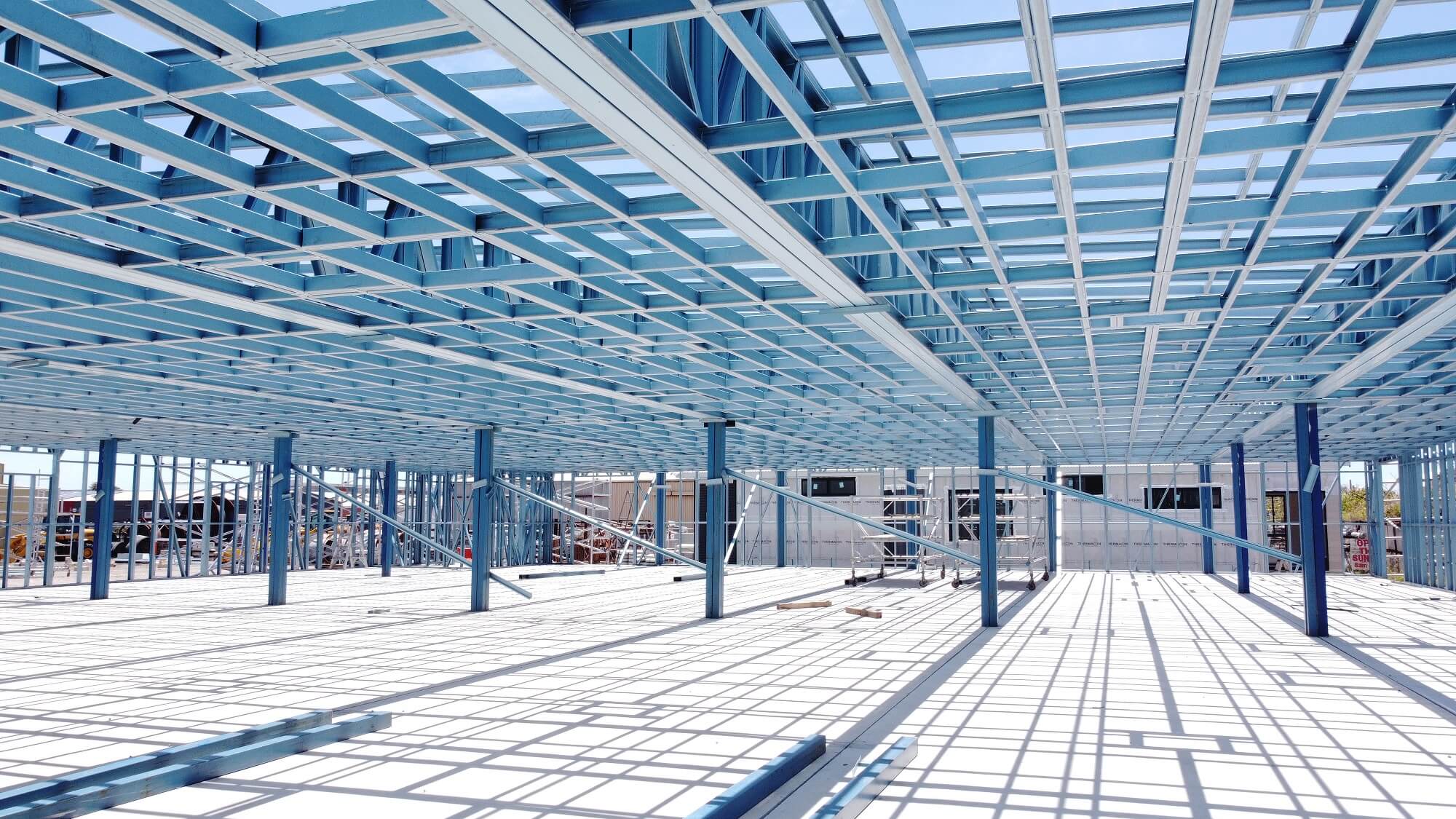
Building homes and offices is changing because people want buildings that are quicker to make, cheaper and better for the environment. Out-dated materials like brick, wood, and concrete work well, but they take longer, cost more, and can harm nature. Light steel buildings are a new way to build. They use thin, strong steel to make homes, shops, hospitals and factories.
To better understand modern construction methods, it’s important to explore light gauge steel buildings, which form the foundation of today’s efficient and durable light steel structures.
Light steel buildings are lightweight structures constructed with a steel frame instead of traditional concrete, wood, or heavy structural steel. These frames use thin, cold-formed galvanized steel sections that are strong yet much lighter than conventional beams, allowing for fast, precise, and cost-efficient construction.
Light steel buildings are common in modular housing, commercial facilities, educational buildings, industrial workshops, and temporary or permanent modular complexes, offering a strong, lightweight, and eco-friendly alternative to conventional construction.
Steel is very strong but not heavy. This makes it easy to carry and build without losing strength.
Since steel parts are made before coming to the site, builders spend less time putting the building together. What takes a long time with old ways can be done faster with light steel.
Steel does not crack, warp, or break like wood. It also doesn’t get damaged by termites or mold. It can protect against fire, strong winds, earthquakes and snow.
Steel can be used again and again which creates less waste because parts come prefabricated. Many steel buildings can also use solar panels and other green energy tools.
Steel helps create different shapes and styles. Buildings can look modern and open, not plain or boxy.
Traditional building methods like wood, brick and concrete take more time and cost more. They can be damaged by weather too. Light steel buildings help solve these problems with fast, strong and eco-friendly construction.
As light steel buildings last a long time, wood can be damaged by termites and moisture. Concrete can crack as time passes, but light steel stays strong for many years. Steel does not catch fire which lowers the chance of fire damage. Steel buildings also handle bad weather well and can resist strong winds, heavy snow and earthquakes if designed right. Steel needs little care. Unlike wood, it does not need regular treatments or pest control. Because of this strength and low maintenance, steel buildings are a smart choice for short and long use.
Building with light steel is fast and avoids delays from bad weather. Using steel saves time and money by cutting building time by half compared to normal ways. This way, less work is needed on site and there is less waste and fewer extra materials. Projects can finish sooner, so businesses start earning faster.
Light steel allows you to create many types of buildings. You can build nice homes, modern offices or big public places. Steel allows big open spaces inside without many support columns. You can make new shapes and plans easily because steel works well with glass, wood and other materials for a stylish look. It suits both small and medium tall buildings. From simple homes to shopping malls, steel helps bring creative designs to reality.
Steel buildings can be recycled again and again without losing strength. These buildings use good insulation to save energy for heating and cooling. Solar panels and other green technology fit well on these frames. Factory production means less leftover waste compared to work done on site. Because of these reasons, many builders choose light steel to build eco-friendly buildings and reduce harm to nature.
Light steel buildings are used for new homes, apartments, and housing areas. They are popular in places where there are not enough houses because they can be built quickly.
Builders use steel construction for offices, shops, schools, and hospitals. These buildings need to be strong and finished fast.
Warehouses, factories, shipping centers, and cold storage use light steel frames. These frames allow big open spaces and can be expanded at a low cost.
This shows why light steel buildings are becoming common all over the world in many industries.
The building industry is using new technology, factory-made parts, and eco-friendly ideas to grant light steel buildings fit well with these changes. Future developments will include:
- Smart building systems by using technology to check energy use, security, and building conditions.
- Advanced factory-made parts by making whole building sections in factories to cut down work at the site.
- Hybrid materials by mixing steel with wood, glass, or other materials for better strength and style.
- Global growth as many countries are building steel homes to handle growing cities and housing needs.
Light steel buildings change our perception of buildings today. They mix steel’s strength with quick, clean building methods and can be used for homes, offices, schools, and factories, showing their wide use. As the world wants faster, greener, and cheaper buildings, light steel is key. From homes to hospitals and warehouses, these buildings are strong, efficient, and flexible in design, unlike older methods. For builders, governments, and people buying homes, choosing light steel buildings is more than a new idea but a smart plan for the future of building.
The cost of light steel structures depends mainly on the project’s size, design complexity, and structural requirements.
Key drivers include the quality and thickness of steel, type of insulation, and any architectural customization.
Site preparation, foundations, and local labor rates can significantly influence the total budget.
Additional expenses arise from doors, windows, electrical systems, HVAC, and interior finishes.
Overall, the investment reflects how much strength, durability, and customization your specific building project demands.


