Hot-dip galvanizing and cold-dip galvanizing are two common galvanizing processes that differ in several aspects.
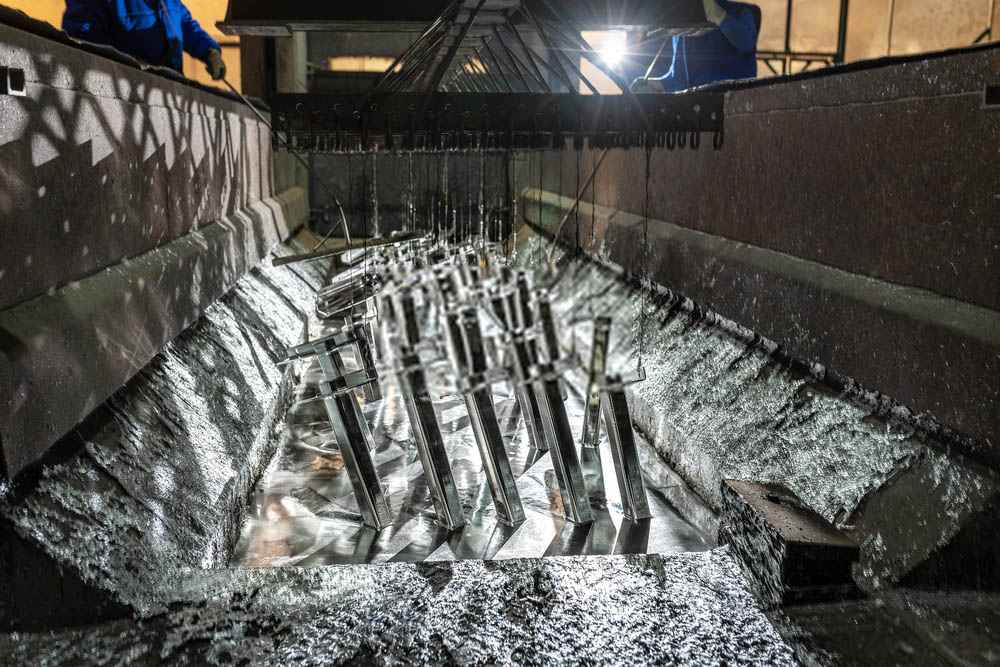
Hot-dip galvanizing and cold-dip galvanizing are two common galvanizing processes that differ in several aspects.
Process PrincipleHot-dip galvanizing: Steel is immersed in molten zinc, causing a chemical reaction between the zinc and the steel surface, forming a zinc-iron alloy layer.
Cold-dip galvanizing, also known as electrogalvanizing, utilizes an electrolytic device. Degreased and pickled pipes are placed in a zinc salt solution. The pipe is connected to the negative terminal of the electrolytic device, and a zinc plate is placed opposite the positive terminal. When electricity is applied, zinc ions are deposited on the pipe surface, forming a zinc layer.
Coating Thickness and StructureHot-dip galvanizing: The coating is thicker, typically 50-150μm, and consists of a zinc-iron alloy layer and a pure zinc layer.
Cold-dip galvanizing: The coating is thinner, typically 5-15μm, and is essentially pure zinc.
Corrosion ResistanceHot-dip galvanizing: Due to its thick coating and zinc-iron alloy layer, it offers excellent adhesion and corrosion resistance. In normal atmospheric conditions, a standard hot-dip galvanizing layer can maintain rust protection for over 50 years without requiring repair.
Cold-dip galvanizing: The zinc layer is thinner, resulting in relatively poor corrosion resistance and a shorter corrosion protection period.
AppearanceHot-dip galvanizing: The surface is relatively rough, silvery white or dark gray, and may have zinc nodules and slag. The color is dark and non-reflective.
Cold-dip galvanizing: The surface is smooth, silvery white or bright gray, and relatively bright. The coating produced using the color passivation process will appear yellow-green, while the coating produced using the white passivation process will appear bluish-white.
ApplicationsHot-dip galvanizing is widely used in applications such as power towers, communication towers, railway and highway protection, streetlight poles, and marine components that require high corrosion resistance and long-term use in harsh environments.
Cold-dip galvanizing is suitable for small hardware, fasteners, automotive parts, and other applications requiring high aesthetic standards or requiring localized plating repairs.
"Hot-dip galvanizing" is "heavy armor" used for tough battles; "cold-dip galvanizing" is "light armor" used for daily use and display.

